
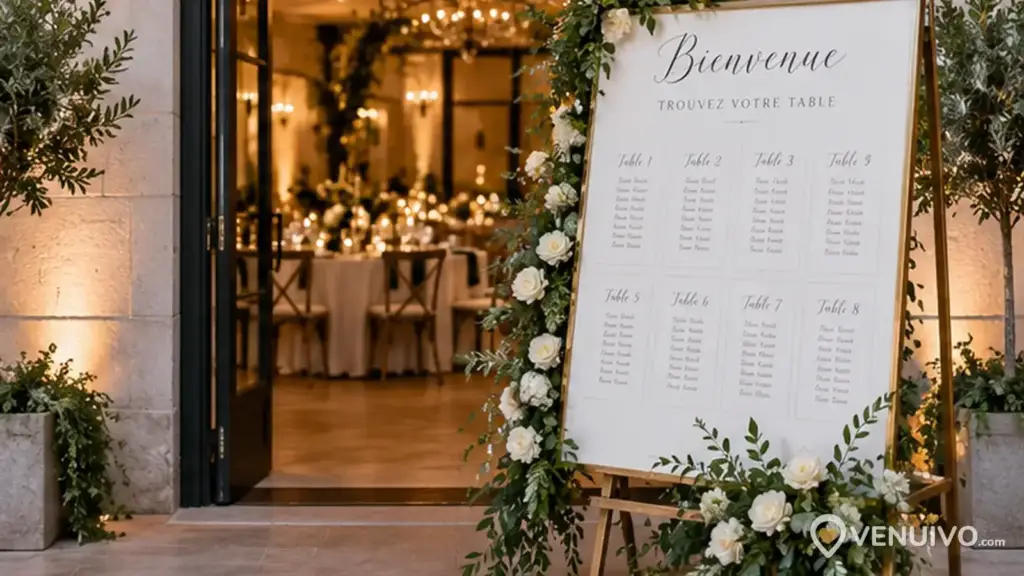
A good wedding seating plan doesn’t have to resolve every family disagreement; it primarily helps each guest feel welcome, easily find their seat, and enjoy the meal. The simplest method is to start with confirmed RSVPs, form groups of people who get along well, and then seat them according to the actual seating plan. Here’s how to do it, even with a blended family, children, or guests from different countries.
Seating plan or free seating: which to choose?
There are three seating arrangements. Open seating allows everyone to choose their own table; this is particularly suitable for small gatherings, provided there are enough seats and no one is left isolated. Seating by table simply indicates a number or name: guests then decide where to sit around it. Chair seating adds a personalized place card; it simplifies service and certain situations, but requires more preparation.
For most sit-down meals, assigning a table to each person is a practical compromise. You can reserve specific seats where it’s truly needed, without turning every chair into a headache.
| Formula | Main advantage | Point of vigilance |
|---|---|---|
| General admission | Spontaneity and flexibility | Risk of incomplete groups or isolated guests |
| Table seating | A good balance between organization and freedom | Requires a reliable list and legible signage |
| Seating in chairs | Maximum precision for reception and service | More changes and place cards to prepare |
Building your seating plan in seven steps
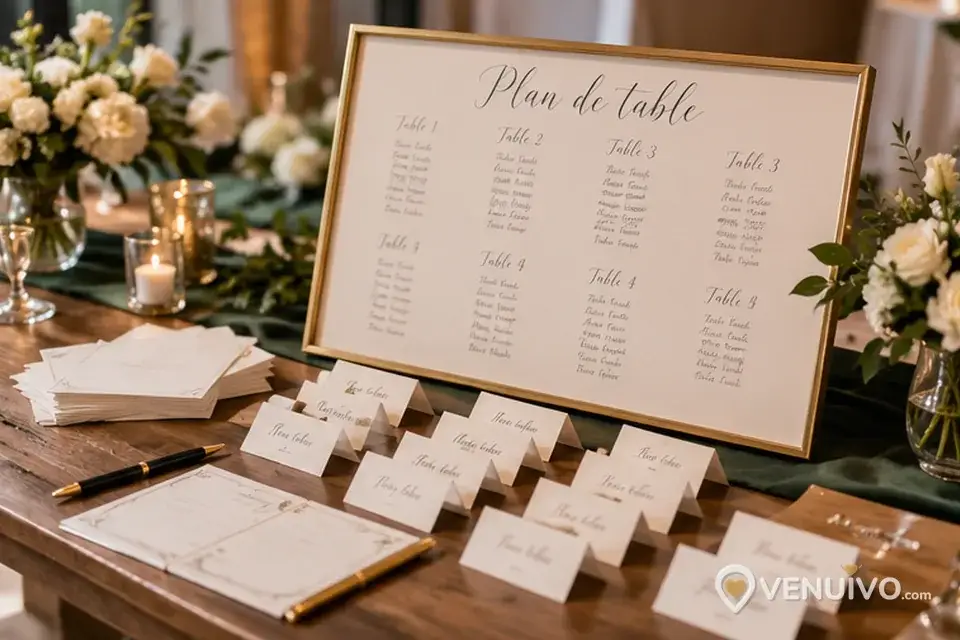
1. Start with a list of confirmed guests
Gather the responses into a single document: first name, last name, group of close friends and family, attendance at dinner, children, any accompanying person, and contact person. Distinguish between confirmed RSVPs and invitations that are still uncertain. A guest attending only the cocktail reception should not be mistakenly assigned a seat at the dinner.
To maintain confidentiality, keep information relevant to the service or accessibility in a restricted document, separate from the plan displayed to everyone.
2. Request the actual seating plan from the reception venue
The number of tables isn’t solely determined by the number of guests. Ask the venue for an up-to-date floor plan showing the confirmed capacity for each table size, service areas, the stage or dance floor, restrooms, exits, and accessible seating. A round table, a long table, and a rectangular table don’t necessarily offer the same seating options.
Before finalizing your choices, check these points when comparing reception venue quotes. A beautiful layout that prevents staff from moving around is not a good layout. Read also our detailed guide
3. Form small groups that will enjoy discussing
Start with affinities rather than obligations: childhood friends, close colleagues, cousins who know each other, longtime neighbors. Note positive relationships and situations where two people prefer not to share a table. Groups serve as a starting point, not rigid boundaries.
Avoid grouping all single people together simply for the sake of it, or leaving a single stranger in the middle of a very close-knit group. If friends and family don’t speak the same language, having a bilingual guest can facilitate communication, provided they aren’t expected to act as translator for the entire evening.
4. First, establish the actual constraints
Mobility needs, young children, hearing problems, distance from speakers, or access to rest areas sometimes require special attention. Ask the people concerned what works best for them instead of deciding for them. A confirmed constraint should take precedence over a decorative preference.
For special meals and declared allergies, create a private correspondence between name, table, and approved menu, then share it only with the staff who need it. Never write the nature of an allergy on the board displayed at the entrance.
5. Divide the groups and check the remaining places
On a shared sheet of paper or board, represent each table with its actual permitted capacity. Move cards bearing the names of the guests around; this method is often faster than constantly changing a pre-decorated poster. Count the children with their own seats and the vendors whose meals require a seat, according to what has been agreed upon with the venue.
Fictional example: For 80 guests seated at ten tables, each seating eight people, the total capacity corresponds exactly to the number of guests. If two additional people confirm their attendance, the seating arrangement will need to be adjusted according to the venue; simply adding chairs in a passageway is not sufficient.
6. Have it proofread without opening up an endless debate
Ask a maximum of two trusted people to review the names, couples, children’s ages, and any potentially sensitive situations. Keep the final decision with the couple. Overly broad consultation often transforms small preferences into new constraints.
7. Confirm a single version with the venue and the caterer
Give your final plan a clear file name, date, and version number. Send the same version to the venue manager as you do to the caterer and the person in charge of welcoming guests. The document should clearly link each person to their table, specific seats, and the number of meals. To complete this coordination, consult our guide to choosing your wedding caterer. Read also our detailed guide
Where should the bride and groom, parents, children, and friends be seated?
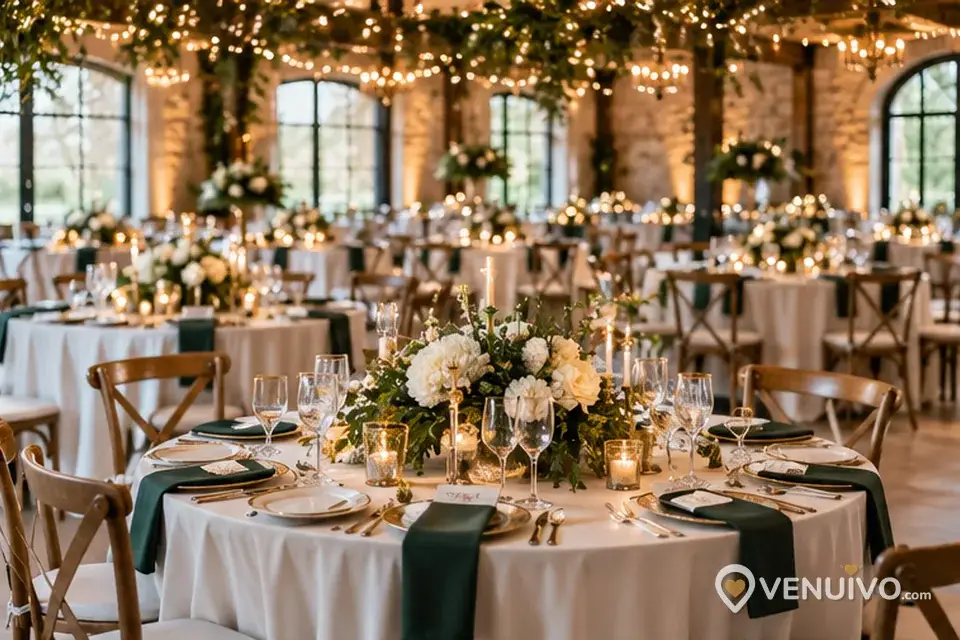
The bride and groom’s table has no set shape.
A head table with witnesses, a table for family and close friends, a table for two, or a large shared table: all these options can work. Choose the one that best suits your relationship and the guests. Those seated at the head table should be able to see and hear the reception without obstructing the flow of traffic or hindering photography.
Blended families: aim for comfort, not symmetry
The rule of "seating both families equally" isn’t mandatory. When relationships are strained, seat people tactfully, taking into account their affinities. Two welcoming tables are better than one head table where everyone is apprehensive about the meal. Discreetly inform the relevant relatives of the decision, without mentioning any tensions to the other guests.
Children, teenagers and accompanying adults
For young children, discuss supervision needs, high chairs, and desired proximity with their parents. A children’s table is only suitable if their age, independence, and the reception’s organization allow it. For teenagers, suggest a group where they can talk to others. Avoid automatically separating couples or isolating an accompanying adult who doesn’t know anyone.
How many tables should you plan for? A useful example
The calculation is used to prepare for a discussion with the venue: number of guests to be seated divided by the permitted capacity per table, rounded up to the nearest whole number. It does not replace the seating plan or traffic flow constraints.
| Fictional example | Capacity retained for the example | Theoretical minimum tables |
|---|---|---|
| 40 guests | 8 people per table | 5 tables |
| 72 guests | 8 people per table | 9 tables |
| 96 guests | 8 people per table | 12 tables |
These figures are neither layout standards nor recommended capacities for all venues. They illustrate a simple division. The actual capacity of each table depends on the furniture, the configuration approved by the venue, and the needs of the guests.
Three reception configurations to adapt
A small wedding
For an intimate meal, a large table can encourage conversation if space allows. A full seating plan isn’t always necessary; a few place cards can suffice to accommodate seniors, relatives, and people with special needs.
A reception where two families meet
Create tables with one or two common connections: a sociable person next to more reserved relatives, cousins of the same age who can chat, or bilingual guests who spontaneously want to help. Don’t force anyone to be the host. The seating should encourage conversation, not force intimacy.
A large wedding with many guests
Assign simple, easily visible numbers to the tables. At the entrance, use an alphabetical list with the corresponding number when there are many names: guests often find their place more easily this way than by reading each table individually. The reception staff should have an up-to-date copy to guide latecomers.
Displaying a seating plan that is both beautiful and legible
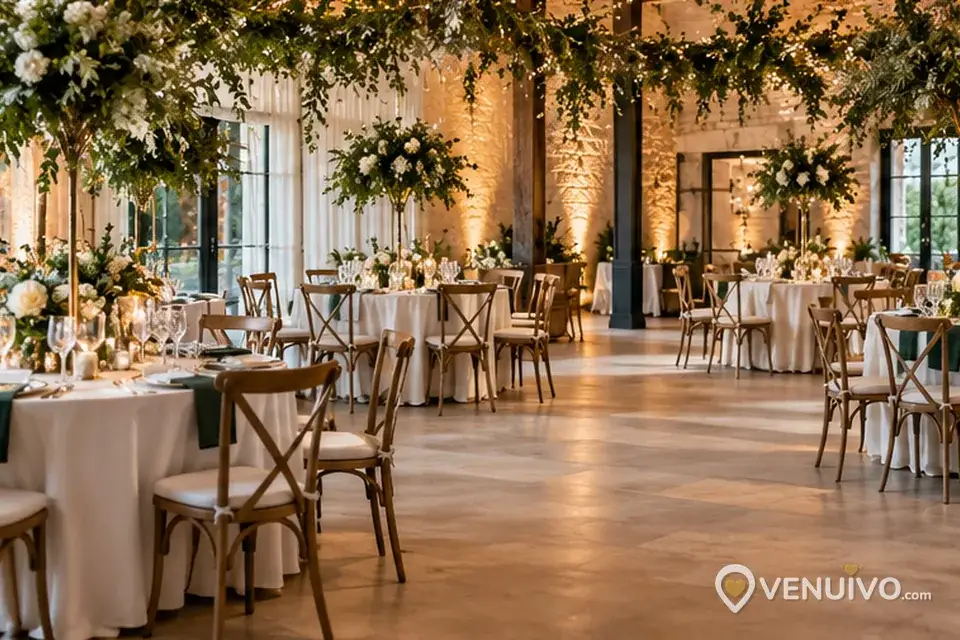
Decorative style comes second to function. Whether you use a floral panel, hanging cards, an easel, or individual envelopes, check the contrast of the text, its size, the display height, and the actual lighting of the location. Do not place the board in a narrow passageway or directly in front of a doorway.
For table names, clear numbers are easy to explain to guests and staff. Names of flowers, cities, or travel souvenirs can be charming, provided there’s a clear way to find them. If the wedding is multilingual, opt for signage that everyone can understand rather than something purely decorative.
The QR code can complement the display, but should not systematically replace a phone-readable version. Ensure that no private information appears on a publicly accessible page.
Mistakes that unnecessarily complicate placement
- Starting too early with the names on the poster: wait for sufficiently reliable answers, while preparing the groups in advance.
- Confusing invitation and attendance at dinner: check the different participation options.
- Ignoring the actual room layout: tables and passageways must be validated by the venue.
- Set up a table for singles: prioritize conversations and affinities.
- Disclosing personal information: allergies, family situations and special needs remain in the service file.
- Multiply the contradictory versions: a single person centralizes the modifications.
- Forget about the arrival of guests: plan who will welcome, direct and deal with a last-minute absence.
When to finalize the seating plan? A flexible reverse timeline
There is no universal date: coordinate with the venue, caterer, and printer according to their deadlines. Here is a suggested schedule, to be adapted to your contracts and the pace of responses:
- About a month before: compare the responses received, consolidate the groups and ask for the exact seating plan.
- Two weeks before: build a first complete placement and have it reviewed.
- One week in advance: confirm with the venue and the caterer the service requirements, attendance and specific meals.
- The last few days: print only after agreement from the service provider concerned and keep an editable version for unforeseen circumstances.
- On the day: hand over to a designated person the latest numbered version, as well as the list of any changes.
Checklist to verify before printing
- All guests present at the meal are listed only once.
- Each table respects its confirmed capacity and passageways remain clear.
- Children, accompanying persons and special places are correctly counted.
- People with accessibility needs were consulted.
- The caterer has a private and up-to-date list of suitable meals.
- The names are correctly spelled, legible and easy to find.
- The venue, the caterer and the reception staff use the same version of the document.
- A manager can handle a cancellation without reprinting the entire table.
FAQ: Frequently asked questions about wedding seating charts
Is it mandatory to have a wedding seating plan?
No, it’s an organizational choice. Open seating can be suitable for a relaxed reception; for a seated meal, assigning tables generally simplifies welcoming and serving.
Should the two families be separated?
Not necessarily. Look for compatibility and comfort among the people rather than an automatic allocation by family branch. You can mix some groups and leave others together.
Where should we seat guests who don’t know anyone?
At a table where one or two people can naturally welcome them, ideally with shared interests. Ask these relatives if they would be willing to facilitate the introductions.
Should a specific seat be assigned to each person?
It’s not essential. Seating by table is often sufficient. Named place cards can be useful for the head table, certain specific needs, or a particularly organized service.
How to handle a cancellation the day before the wedding?
Keep the editable digital version and notify the relevant professionals. If possible, discuss any changes with the reception team rather than disrupting the groups at the last minute. Meal changes must be confirmed with the caterer.
In summary: a welcoming plan is better than a perfect plan
The best seating plan is one that respects the reception space, simplifies the team’s work, and makes guests feel comfortable. Start with confirmed attendees, group them by compatibility, check for any constraints, and keep only one final version. To plan the rest of your day, find the essential steps for organizing a wedding and the method for tracking your wedding budget. Read also our detailed guide Read also our detailed guide