
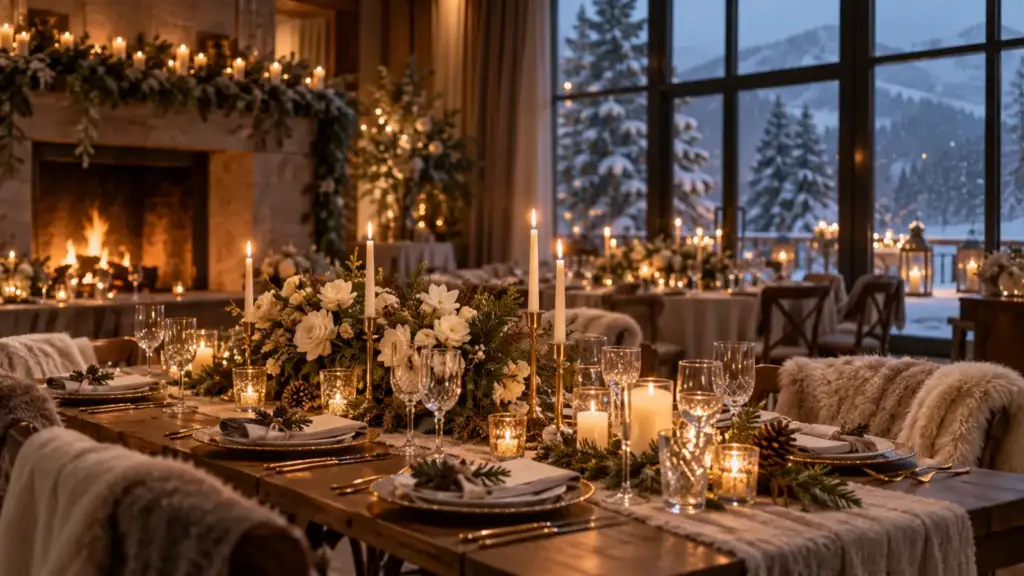
A winter wedding can feel wonderfully welcoming: warm lighting, elegant tables, candles and an intimate celebration. Yet the comfort of your guests depends on much more than attractive photographs. In December, January or February, heating, access routes, daylight and the way the drinks reception is organised are especially important.
The key principle: choose a venue that could host the entire celebration indoors if necessary. Confirm which spaces are heated, schedule photographs around daylight, and agree on a specific bad-weather contingency plan with your suppliers.
Why consider a wedding in winter?
A winter wedding creates a different atmosphere from a midsummer celebration. Guests gather in inviting rooms, lighting can become a central feature of the decoration, and the meal can feel particularly convivial. Some venues and suppliers offer dates outside their busiest season. However, lower prices should never be assumed: compare quotations for genuinely equivalent services.
You can also explore rich colours, battery-operated candles, a warm drinks station or a cosy lounge. The trade-off is the need to pay closer attention to guest comfort, weather and transport.
What type of wedding venue works best in winter?


The best wedding venue for winter is not necessarily the one with the grandest fireplace. What matters is whether it can accommodate all the planned events without improvisation: any on-site ceremony, drinks reception, dinner, dancing and quiet areas for guests.
| Venue type | Winter appeal | Main point to check |
|---|---|---|
| Castle or country estate | Elegant setting, potentially several lounges | Heating in large rooms and routes between buildings |
| Converted barn | Welcoming timber and stone character | Insulation, draughts and heated toilets |
| Purpose-built reception hall | Potentially simpler logistics | Real indoor capacity for drinks, dining and dancing |
| Private-hire restaurant | Catering and celebration under one roof | Exclusive use, timings and entertainment space |
| Mountain chalet or lodge | Distinctive winter setting and possible lodging | Access in poor weather, shuttle options and room availability |
Start by exploring wedding venues and suppliers on VENUIVO, then ask each property what actually operates during your chosen month. A beautiful summer terrace photograph does not prove that an indoor drinks reception is available in winter.
Heating, coat storage and access: three priorities
Check actual heating provision
Find out which areas are heated: dining room, drinks reception, dance floor, toilets, children’s area and corridors between buildings. Ask how the system performs when doors open frequently or many guests arrive at once. If the venue usually opens in warmer months, request written confirmation of its winter arrangements for your date.
Avoid improvised portable heaters, cables across walkways and unauthorised flames. The venue operator should confirm which solutions meet its safety requirements.
Plan a proper coat and boot area
Heavy coats, boots and umbrellas quickly fill a reception area. Check where belongings will be stored, how they will be identified, whether the walking routes remain clear and who will supervise the area. A small wedding might need only coat racks; a larger gathering may require a dedicated cloakroom.
Walk the guest journey yourself
Think about an older guest, someone using a wheelchair or a family with a pushchair. Review parking, lighting, step-free access, entrance, toilets and dining room. If drinks take place in another building, agree on a sheltered route or a practical indoor alternative. Establish who is responsible for clearing snow, ice or mud from the paths.
How do you create a workable bad-weather plan?
A winter wedding backup plan should be more specific than saying “we’ll decide on the day”. Agree an alternative programme in advance. For each element planned outside, identify the substitute room, its usable capacity, furniture and the deadline for switching plans.
- Ceremony: specify an alternative space with enough seats and room for the celebrant.
- Drinks reception: arrange a covered area where guests and catering staff can move comfortably.
- Photography: identify bright indoor locations and a sheltered spot for a few brief outdoor portraits.
- Travel: prepare alternative access arrangements and a contact for important guest updates.
- Decision-making: name the person who decides with the venue manager and informs every supplier.
A marquee is not automatically an adequate winter alternative. Heating permissions, structural stability, flooring, electricity and access all need checking. A properly equipped indoor room is often safer. For contract details, read our guide to comparing wedding venue quotations.
When should you schedule the ceremony and photos?
Winter daylight hours are shorter and vary with both date and location. Do not copy a summer wedding timeline. Check the local sunset time for your specific date, then ask the photographer how long couple portraits, group photos and transfers will take.
Here is an illustrative plan, not a fixed timetable: a ceremony in the early afternoon, family and couple photographs while there is still daylight, an indoor drinks reception later in the afternoon, followed by dinner and dancing. If you want sunset portraits, include the journey between ceremony and reception. In mountainous areas, surrounding terrain may reduce the light earlier than the official sunset time suggests.
Give the photographer, caterer, DJ and venue manager one shared schedule. If plans change, everyone should know who makes the final call.
What wedding catering works well in winter?

A winter wedding does not require raclette or a heavy banquet. Choose a menu that suits the couple, their guests’ dietary needs, the kitchen facilities and the preferred pace of the meal. Seasonal dishes may be appealing, but their availability needs confirmation from the caterer.
For the drinks reception, compare hot canapés, live food stations and table service. Small portions of soup, warm vegetarian bites or a selection of sweets can suit different styles. Ask how food will be kept at the appropriate temperature, where the service kitchen is located and how far staff must carry dishes.
A hot-drinks station may be welcome on arrival or later in the evening. Confirm who provides the drinks, equipment, staffing, consumables and cleaning. Discuss allergies and other dietary needs before accepting a quotation. See our guide to choosing a wedding caterer for more questions.
Winter wedding decoration: warmth without clutter

Successful winter decoration combines a consistent colour palette, pleasant lighting and suitable materials. LED candles, appropriate string lights, greenery, velvet, linen and glass can create depth. Avoid filling every table with ornaments: guests still need space for plates, drinks and conversation.
Try two primary colours with a single accent. Ivory and forest green with touches of copper can suit a contemporary hall or a historic estate. Burgundy and cream create a richer effect, while white and pale timber feel softer. There is no mandatory winter wedding style.
Ask the venue about regulations on candles, hanging decorations, fabrics and electrical connections. Ensure pathways remain well lit and that photography can take place comfortably. Our wedding venue decoration guide offers further inspiration.
Photography and music: adapting suppliers to the season
Your photographer should know the fallback rooms and have a lighting plan if outdoor portraits are impossible. Windows, sheltered corners and attractive interior details can provide alternatives. Snow portraits are a weather-dependent possibility, not a guaranteed outcome.
For the DJ, acoustics, installation time, permitted sound levels and coordination with dinner still matter most. In winter, try to avoid activities that repeatedly force guests to move between the warm dance floor and a cold outdoor space. Our guide to choosing a wedding DJ covers the essentials.
Winter wedding budget: the extra costs to watch
An out-of-season date can sometimes be attractive, but never assume automatic savings. Compare the full cost of your reception, not only the advertised venue hire. Some places include heating, furniture, cloakroom and cleaning; others charge separately for them.
| Cost item | What to confirm in the quote |
|---|---|
| Venue hire | Indoor rooms included, access times, setup and breakdown |
| Heating | Spaces covered, operating hours and potential supplements |
| Lighting | Car park, access paths, decorative and technical lighting |
| Catering | Warm food service, kitchen facilities, staffing and overtime |
| Transport | Shuttles, parking and poor-weather arrangements |
| Accommodation | Rooms genuinely available, prices and cancellation terms |
| Backup plan | Alternative indoor space costs and decision deadline |
When comparing two properties, keep the guest count, timing and room layout identical. Our wedding budget guide explains how to allocate spending and allow for surprises.
12 questions to ask before booking a winter wedding venue
- Is the venue open and prepared to host a wedding on your chosen date?
- Which areas are heated, and from what time?
- Can the ceremony, drinks, dinner and dancing all move indoors if necessary?
- What is the genuine capacity with your tables, food stations and dance floor?
- Is there a cloakroom, and who operates it?
- Who lights, clears and maintains the parking and walking routes in poor weather?
- Can guests with reduced mobility reach all the required rooms?
- Where can photographs be taken if outdoor shooting is impossible?
- Which lighting and sound equipment is included?
- What rules apply to candles, portable heating and decoration?
- Are there extra charges for heating, staffing or the contingency plan?
- Who decides when to activate Plan B, and who informs the suppliers?
Ask for written answers to significant questions. You can then compare several properties using the same checklist rather than relying on their pictures alone.
France, Belgium and Switzerland: account for local conditions
A winter wedding in Paris, the Belgian Ardennes or the Swiss Alps comes with different travel and daylight challenges. Adapt your arrangements to the precise date, altitude, roads and distances between the ceremony and reception. Local regulations and suppliers’ terms may also vary between countries and municipalities.
For weather forecasts and alerts, check the official services Météo-France, Belgium’s Royal Meteorological Institute and MeteoSwiss. Forecasts can change, so a reliable contingency plan is better than relying on good weather predicted well in advance.
Frequently asked questions about winter weddings
Can we hold a drinks reception outside in December?
It depends on the venue, climate and duration. Always prepare a proper indoor alternative with enough capacity. Any equipment outside must be permitted and safe.
Are wedding venues cheaper in winter?
Some offer different off-season terms, while others do not. Compare final prices, access hours, included services and additional charges.
Do we need a venue with accommodation?
Not necessarily, but nearby rooms can reduce late-night journeys, especially in remote or mountainous areas. Check room availability, bookings and alternative accommodation.
How do we plan photographs when darkness falls early?
Build the timetable around available daylight at your exact location and date. Discuss indoor settings and suitable lighting with the photographer as well.
What is the main mistake to avoid?
Choosing a venue for its outdoor grounds without confirming that the entire reception can happen comfortably inside. Check backup spaces, guest comfort and overall costs before signing.
In summary: a great winter wedding starts with the right venue
Often, the essentials are simple: a warm reception room, easy access, thoughtful lighting and suppliers working together. First find a venue where your guests can celebrate comfortably; then build the menu, decoration and entertainment around its real capabilities.
Explore wedding venues and suppliers on VENUIVO and compare options for your date. Always confirm availability, capacity and services directly with each provider.