
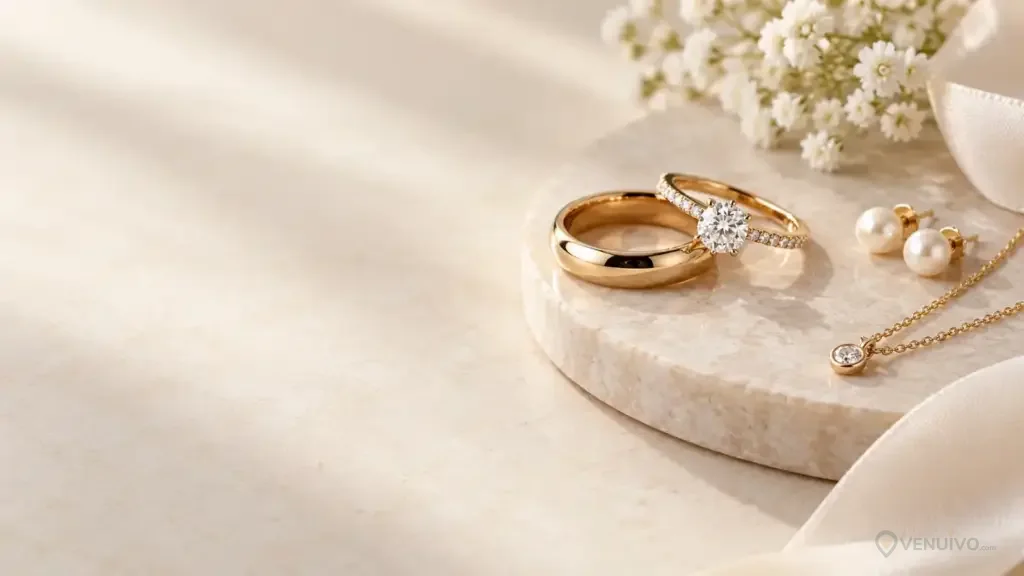
Wedding jewellery can complete an outfit and become a keepsake long after the celebration. Yet finding the right wedding rings, earrings, necklace or hair accessories is not about wearing everything at once. Start with your outfit, your personal taste, the way you move and your budget. Think separately about wedding bands for everyday wear and decorative pieces you may wear only on the day.
This guide explains how to create a coherent look, choose materials wisely, assess comfort and shop without last-minute surprises.
Which pieces of jewellery do you actually need?
There is no compulsory bridal set. Wedding bands may carry the strongest symbolism, while earrings, a necklace, bracelet, brooch or hair comb can add a personal touch. For a groom, a watch, cufflinks or tie pin can complement the wedding band.
Choose one visual focal point. If you love large earrings, keep the necklace subtle or skip it. If you wear a family heirloom, let it shape the style of the other accessories rather than trying to match it to a purchased set.
Match jewellery to your dress and neckline
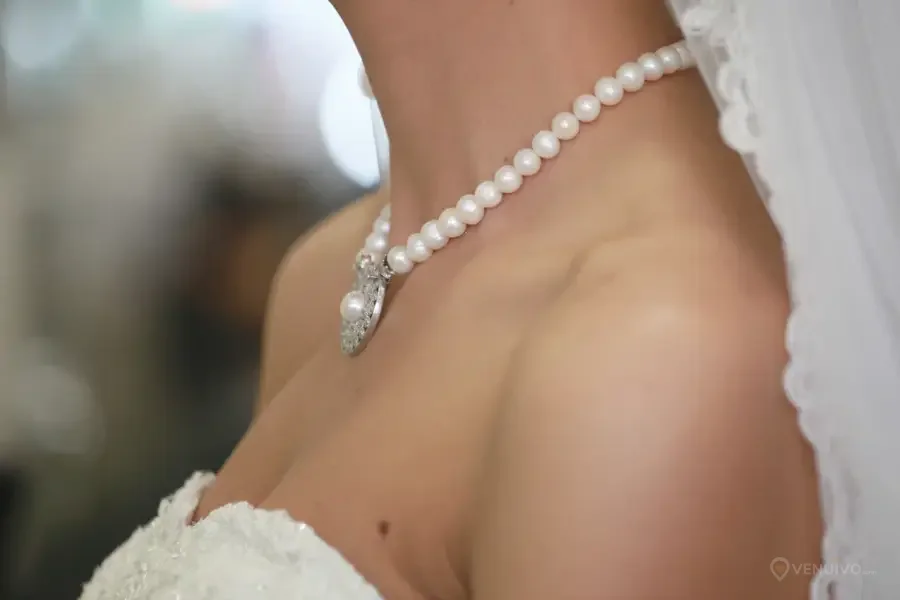
Try your jewellery with the actual wedding dress, not just a photograph. A strapless dress can look lovely with a short necklace or more prominent earrings, but you rarely need both. A V neckline can suit a small pendant that follows the line of the fabric. With a high neck or embellished bodice, earrings or a hairpiece may give a cleaner result than adding another necklace.
Do not treat these suggestions as strict rules. Check the complete outfit in daylight, from the front and side, and take a few photographs. A well-chosen piece highlights the wearer rather than distracting from the dress. You can also read VENUIVO’s wedding dress guide before finalising accessories.
Earrings, hairstyle and veil: think together
Long earrings often stand out with an updo, while small studs can be hidden by loose hair. Ask your hairstylist to test the accessories during a trial. Make sure posts, clasps and dangling parts do not catch on lace or the veil.
Comfort matters more than a showroom photograph. Heavy earrings, sharp edges and unreliable fastenings can become a problem when dancing or greeting guests. If you have a known metal sensitivity, ask precisely which materials touch your skin.
Necklaces, bracelets and pearl sets

A bridal set can share a colour, material or small design detail without consisting of identical pieces. If your necklace is elaborate, choose lighter earrings. For bracelets, check sleeve length and whether the piece moves freely without snagging the outfit.
Family jewellery, a carefully restored brooch or borrowed earrings can carry more meaning than a new purchase. Ask a jeweller to inspect delicate clasps before the wedding.
Do not confuse cultured pearls with imitation pearls: cultured pearls are genuine pearls grown with human assistance. Ask the seller to identify what you are buying and how to care for it.
Choosing wedding rings: five practical checks

- Fit: try the rings at different times if possible and make sure they slide over the knuckle comfortably.
- Width and profile: broad bands feel different from narrow ones; a rounded inner profile may be more comfortable.
- Metal: ask about composition, maintenance and the finish.
- Compatibility: if you wear an engagement ring alongside your band, test whether the two settings rub or sit awkwardly together.
- Aftercare: check resizing, engraving, delivery dates and repairs before ordering.
Your partner’s band does not need to be identical. A shared engraving or design detail can provide a connection even when the shapes differ.
Gold, silver, platinum and pearls: understand the materials
Gold, silver and platinum have different weights, appearances and maintenance needs. Gold alloys come in several colours and purities: 750-thousandths gold (18 carat) contains 75% pure gold. France’s customs authority explains the precious-metal hallmark rules. Always ask what the alloy contains, especially if you have a sensitivity.
- Yellow gold: warm and timeless; check the purity and aftercare.
- White gold: pale and elegant; ask whether it has a rhodium coating that may need renewing.
- Rose gold: a softer colour, created through its alloy.
- Platinum: naturally white and dense, but it can still show scratches.
- Silver: bright but may tarnish, so storage and cleaning matter.
- Pearls: elegant but sensitive to abrasive contact and some products.
Follow the care instructions for each stone. The GIA’s pearl-care advice recommends protecting pearls from perfume and cosmetics, wiping them gently after wear and avoiding harsh cleaning methods.
Personal style, cultural traditions and heirlooms
Minimal jewellery can be just as meaningful as an elaborate ceremonial set. You might wear a family necklace, symbolic bracelets, a traditional gold set or several different pieces across successive celebrations. Cultural practices differ between families and regions; decide which traditions matter to you rather than assuming a single format is compulsory.
For one example of celebrations with distinctive jewellery traditions, explore our guide to Indian weddings. The best choice reflects your own story as well as the wedding setting.
How much should you budget for wedding jewellery?
There is no useful universal average without knowing the materials, metal weight, stones, craftsmanship and services included. Set a budget before shopping and distinguish wedding rings for everyday use from optional day-of accessories.
Compare quotes on a like-for-like basis: metal purity, stones, engraving, sizing, delivery, warranties, returns and later maintenance. Borrowing or renting some decorative accessories may make sense if you prefer to spend more on a ring you will wear daily. For the wider celebration, see our wedding budget guide.
When to shop and how to test the whole look

Look for inspiration early, but finalise the jewellery after choosing the dress. Made-to-order wedding bands, engraving or resizing may require extra time, so confirm deadlines directly with your jeweller.
During a final trial, combine the dress, veil, hairstyle and jewellery. Walk, sit, embrace someone and move your arms. If you constantly readjust a piece, it may not be the right choice. Keep each item in a labelled box and ask someone reliable to bring the rings to the ceremony.
Mistakes to avoid
- Buying the entire set before seeing your finished outfit.
- Wearing so many statement pieces that none stands out.
- Skipping a proper fit and comfort test.
- Assuming a metal is suitable for sensitive skin without checking its composition.
- Applying perfume directly onto pearls or using unsuitable cleaners.
- Forgetting engraving, repairs, resizing and delivery lead times.
Wedding jewellery FAQ
Do I have to wear a necklace?
No. Earrings or hair accessories can be enough when a dress already has a detailed neckline.
Can I mix yellow gold and silver-coloured jewellery?
Yes. Repeat one detail or add a two-tone piece to make the combination feel intentional.
Do both wedding bands have to match?
No. Fit and personal preference matter more than identical designs.
What is best for sensitive ears?
Ask about the exact metal composition of the posts and clasps. Seek medical advice for a known allergy.
Can wedding jewellery be borrowed or inherited?
Absolutely. Check the clasp and setting, and have fragile pieces inspected before wearing them all day.
Find a jewellery professional for your wedding
The right jewellery makes you feel like yourself. Prioritise a comfortable fit, compatible materials and a coherent overall look. Compare jewellers and accessory specialists in the VENUIVO wedding jewellery directory, then ask about customisation, fitting, repairs and delivery before placing an order.